
Components / Thermal envelope
Cool room doors: types, seals and how to choose
The door is the busiest, weakest part of a cool room. Here are the door types, how the seal and heater wire work on a freezer, and how to choose and size the opening.
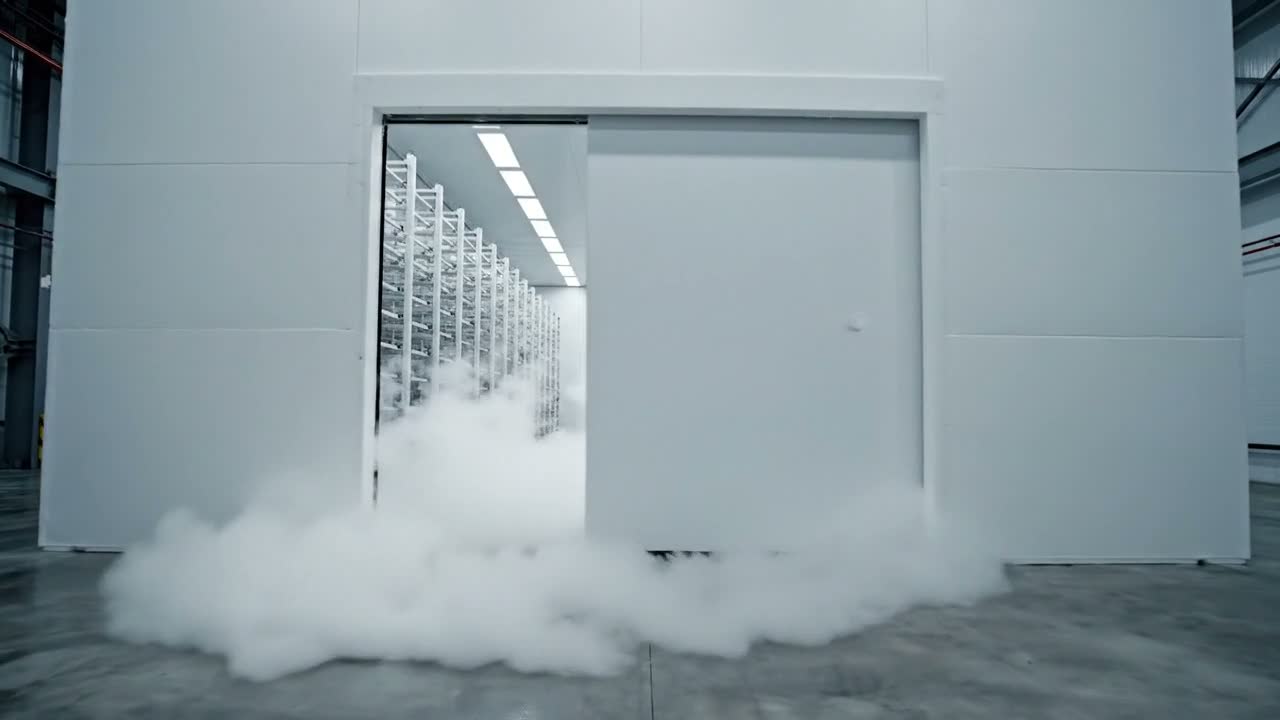
A cool room is only as good as the weakest part of its envelope, and that part is almost always the door. The panels are sealed and static; the door moves, gets knocked by trolleys, and opens onto warm, humid air many times a day. Choose the wrong door type or let the seal go, and the room fights to hold temperature no matter how good the panels are. This guide covers the door types used in Australia, how the seal and heater wire work, and how to size and choose an opening.
01 / 04
Why the door is the biggest weak point
Every panel joint in a cool room is glued, foamed and left alone. The door is the exception: it is a moving joint that has to re-seal perfectly on every close. When it does not, warm moist air pours in, the refrigeration runs harder, ice forms around the frame, and your running costs climb. Most temperature complaints on a room with good panels trace back to a door that no longer seals — a worn gasket, a dropped hinge, or a closer that no longer pulls the door shut.
That is why door choice matters as much as panel choice. A door sized and specified for the traffic it sees will seal for years; an under-specified one becomes the room’s permanent thermal leak.
02 / 04
Door types: hinged, sliding and bi-parallel
Three door formats cover almost every Australian cool room. The right one depends on the opening size, the traffic through it, and the space you have beside the opening.
| Door type | Best for | Trade-off |
|---|---|---|
| Hinged (personnel) | Standard walk-in access, tight budgets, most chillers and freezers | Swing arc needs clear floor space; heavy leaves need cam-lift hinges |
| Sliding | Wide openings, forklift or pallet traffic, where there is no room for a swing | Needs clear wall beside the opening for the leaf to park; more hardware |
| Bi-parallel / telescopic | Very wide openings where wall space each side is limited | Most complex and costly; usually specified for large industrial rooms |
Cutting across those formats is the split between personnel doors (people, hand trolleys) and traffic doors (forklifts, pallet jacks, high throughput). A personnel door is smaller, cheaper and seals easily; a traffic door is bigger, more robust, and often paired with strip curtains or a fast-acting door to limit air exchange during the seconds it stands open.
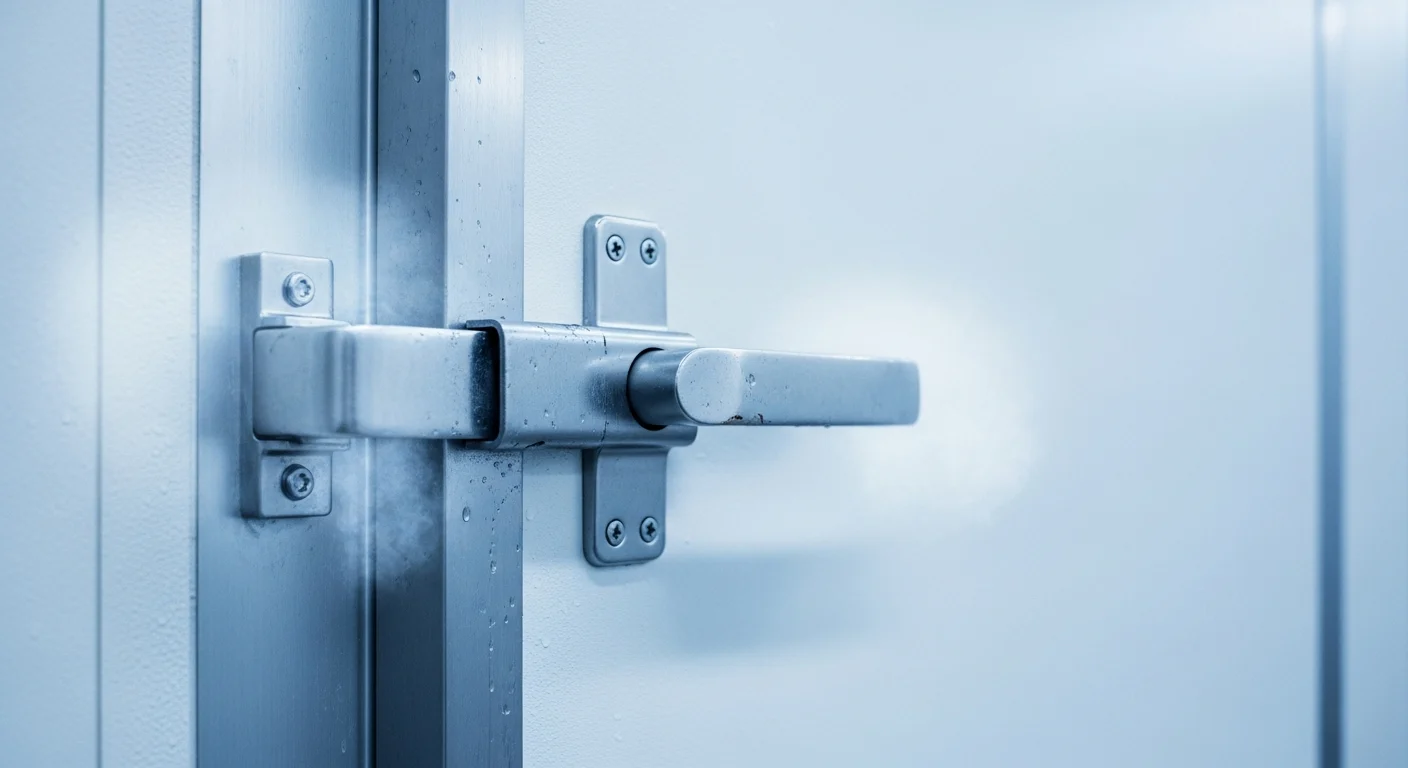
On a chiller a good seal keeps the cold in. On a freezer that same seal, left alone, will freeze itself shut — which is why freezer doors get a heater wire.
Technical Desk
03 / 04 — The part people miss
The seal and the freezer heater wire
The perimeter gasket is a soft compressible seal that the door closes onto. Its job is simple: a continuous, unbroken contact line around the whole opening. A gasket that is torn, hardened with age, or held off by a dropped hinge leaves a gap — and a gap anywhere means warm air in and condensation or ice around the frame.
On a freezer there is a second problem. The frame sits below 0 °C, so any moisture that reaches it freezes — and ice on the seal or frame will glue the door shut and break the gasket when forced. The fix is a low-wattage heater wire (anti-sweat / anti-frost wire) run around the door frame. It keeps the frame just warm enough to stop ice forming on the seal line, so the door keeps sealing and opening cleanly. Chillers above 0 °C generally do not need it; freezers do.
Do
- Check the gasket seals continuously all the way around
- Fit heater wire on any freezer door frame
- Match door size to the traffic — trolleys, pallets, forklifts
- Use a self-closer so the door never sits ajar
Don’t
- Force a freezer door that has iced up — you will tear the seal
- Undersize a traffic door and rely on people being careful
- Leave a worn gasket — it is the cheapest fix with the biggest payback
- Prop the door open during loading without a strip curtain
Get the panel spec and opening right from the start
Hardware, sizing and retrofit
Beyond the leaf and the seal, a few pieces of hardware decide how well a door lives with daily use. Get these right when you specify the opening.
- Cam-lift hingesThey lift the door slightly as it opens and let it drop and compress the seal as it closes — essential on heavier leaves.
- A door closerPulls the door fully shut every time so it is never left ajar. The single biggest cause of avoidable heat gain.
- Size the opening to the trafficPersonnel doors around 700–900 mm wide; traffic and pallet doors wider. Measure your widest load, not just the doorway.
- Retrofit vs newA new door in an existing panel wall means a clean cut and a properly framed, sealed opening. If the panels are tired, it is often better to plan the door with a new room. See how to build a cool room.
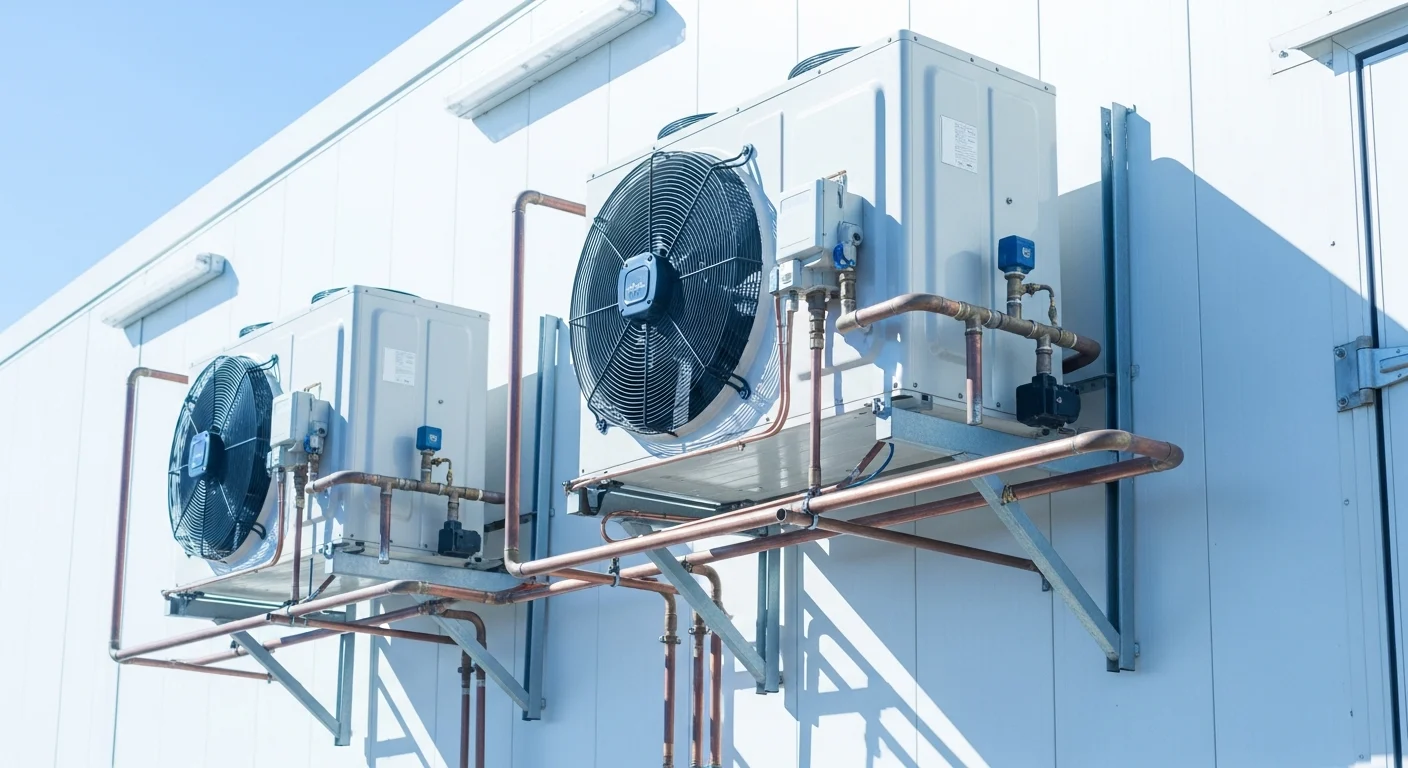
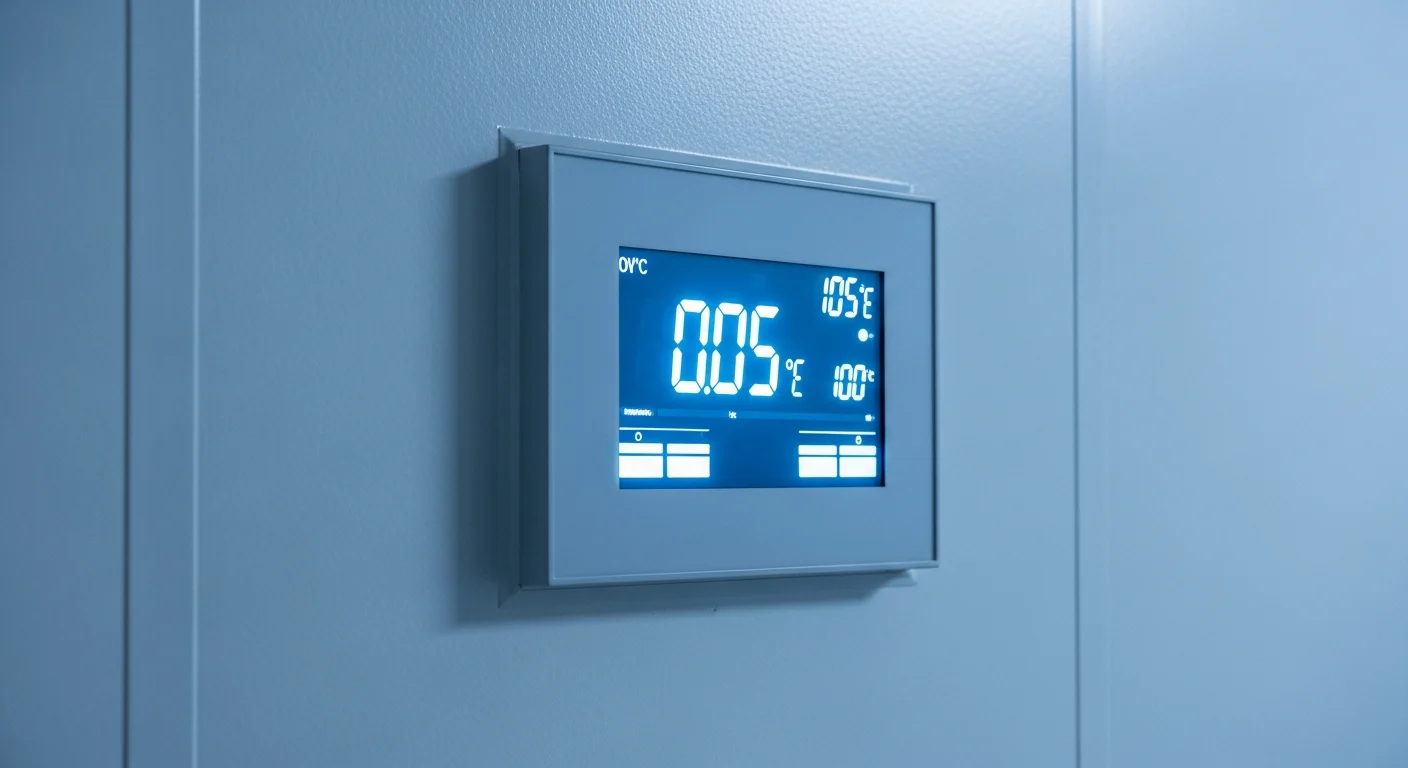
Whichever door you choose, remember it only performs as well as the envelope around it. A door in a well-insulated PIR freezer wall, with heater wire and a good seal, will hold temperature the room was designed for. The same door in a leaky wall cannot save a room that was under-specified — and the door set-point still has to match the room temperature you are running. If you are still choosing between chiller and freezer duty, the sizing of the whole system, including the refrigeration unit, follows from that decision.
Frequently asked questions
What is the difference between a hinged and a sliding cool room door?
A hinged door swings on cam-lift hinges and suits standard walk-in access where there is clear floor space for the swing. A sliding door parks along the wall beside the opening, which suits wide openings and forklift or pallet traffic where a swing arc is not practical. Hinged doors are usually cheaper; sliding doors handle wider openings.
Why do freezer doors have a heater wire?
A freezer door frame sits below 0 C, so moisture freezes on it. A low-wattage heater wire (anti-sweat wire) run around the frame keeps it just warm enough to stop ice forming on the seal line, so the door keeps sealing and opens cleanly instead of freezing shut. Chiller doors above 0 C generally do not need it.
How do I stop condensation and ice around a cool room door?
Check the perimeter gasket seals continuously all the way around, fit a self-closer so the door is never left ajar, and on a freezer make sure the frame heater wire is working. Condensation and ice almost always mean warm moist air is getting past a worn seal or an open door.
Can I replace just the cool room door?
Yes. A door can be retrofitted into an existing panel wall by cutting and framing a properly sealed opening. If the surrounding panels are old or under-insulated, though, a new door will not fix a leaky room, so it is worth checking the panel condition before spending on the door alone.