
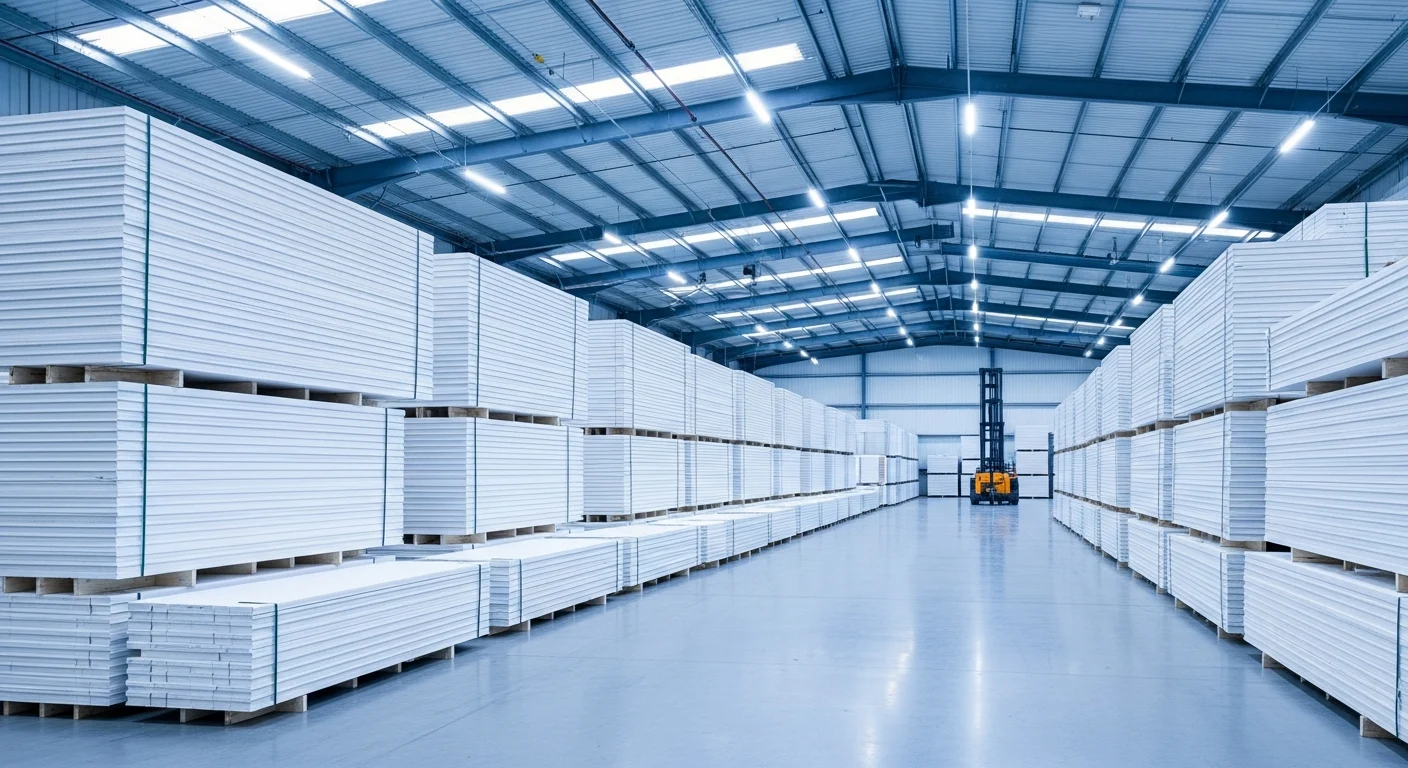
The cheapest panel quote is almost never the cheapest cool room. Under-spec panels leak heat, run your compressor harder, and quietly cost you more in power every single year — on top of fire, compliance and warranty risk. Here’s the trap, the maths behind it, and how to buy panels properly.
Insulated sandwich panels are the walls, ceiling and door of your cool room. Unlike a fan or a controller, you can’t swap them out cheaply once the room is built. Get the panel wrong and you’re locked into higher running costs for the life of the room. That’s why the panel is the last place to chase the lowest price.
You’re not buying a panel — you’re buying an R-value
A panel’s job is to slow the heat leaking into your cold space. That’s measured by its R-value (higher = better insulation), which comes from the core’s thermal conductivity (lambda, or λ) and its thickness. Every watt of heat that leaks in is a watt your refrigeration system has to pump back out — continuously, 24/7.
Cheap panels win on price by cutting the exact thing you’re paying for: real, tested R-value. A panel that’s thinner than labelled, uses an under-density core, or has no datasheet at all can deliver far less insulation than it appears to — and you won’t see it until the power bills arrive.
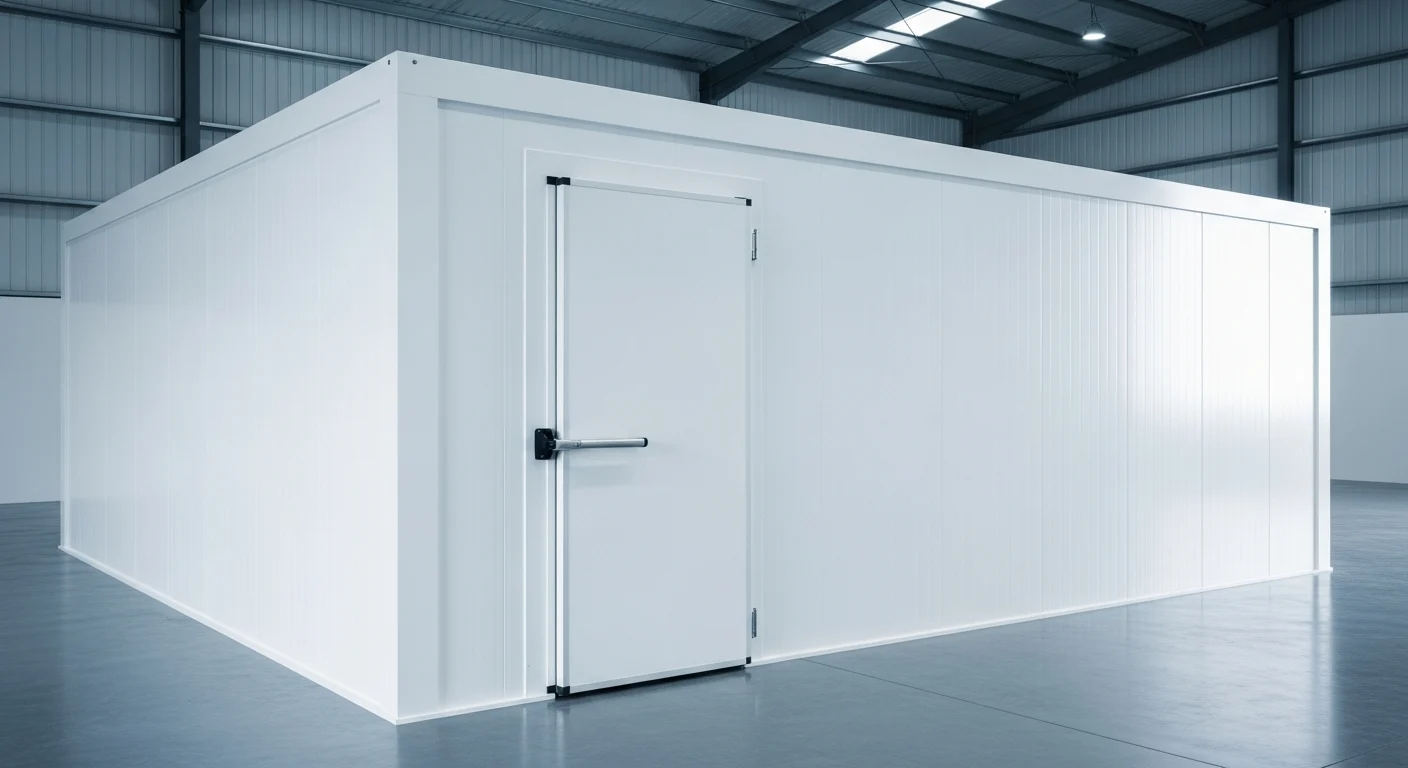
How cheap panels cut corners
These are the corners that get cut to hit a bargain price. Any one of them should make you pause:
- Under-thickness or mislabelled thickness. A “100 mm” panel that measures 90 mm quietly loses R-value.
- Low-density core. EPS below spec density (or reclaimed foam) insulates less and can sag or compress over time.
- No datasheet. No tested λ, no stated R-value, no core density — meaning every performance claim is unverified.
- No fire rating. Standard cores without a fire-retardant grade or the right classification can fail compliance and void insurance.
- Thin steel facings. Below ~0.4 mm the skins dent, rust and flex — and hygiene suffers in food spaces.
- Poor joins / no proper cam-locks. Bad seams create thermal bridges and air gaps that leak cold and invite condensation.
- No warranty and no accessories. No flashings, seals or matching trims, and no one to call when something’s wrong.
Saving $500 up front can cost you more every year
Heat leaking through the walls is roughly proportional to how poor the insulation is. Drop the real R-value and the constant heat load rises — so the compressor runs longer, and that extra electricity is paid for the life of the room.
→ more heat in = more compressor runtime = higher kWh every day
Worked illustration (indicative only): a cool room with roughly 80 m² of panel surface, held ~25°C below ambient. If a cheap panel delivers a real R2.0 where a properly specified panel would give R2.7, the extra heat leak can add on the order of a few hundred watts of continuous load. At Australian electricity rates that can be $200–$500+ a year in extra power — recurring, forever. The “cheaper” panel often pays back its saving to the grid within the first year and then keeps costing you.
Don’t buy your cool room panels on Facebook Marketplace
Marketplace is where the cheapest listings cluster — and on a cold room, cheap is the bait, not the bargain. Almost everything sold there is second-hand, ex-display, de-commissioned or transport-damaged, and it turns up with none of the things that actually protect you:
- No datasheet — no tested R-value, core type, density or thickness you can verify. The spec is whatever the seller says it is.
- No fire rating — nothing you can put in front of a certifier or an insurer.
- No matching parts — odd sizes with no flashings, cam-locks or door hardware to finish the room.
- No warranty, no support, no recourse — if the panels are under-spec or arrive damaged, there is no one to call.
And here’s why those listings are cheap: the price is low because the R-value, the fire rating and the warranty have been cut out. You’re not saving money — you’re taking on someone else’s risk and paying for it later, in power bills, a failed inspection, or a room that never holds temperature.
Where to actually buy — and what to ask
Buy from an established manufacturer or a reputable local Australian brand/supplier — someone who stands behind the product, supplies matching accessories, and can give you the paperwork. Before you pay, ask for:
- A datasheet with tested λ, core type, core density, thickness and the resulting R-value.
- The fire rating / classification, and confirmation it suits your building class under the NCC.
- Steel facing gauge (e.g. 0.45 mm) and finish (Colorbond / galv).
- A written warranty — on both the panel and the facings.
- Matching accessories: cam-locks, flashings, seals, door hardware.
- Delivery and support Australia-wide, and someone to call if there’s an issue.
Yes, a properly specified panel from a real supplier costs a little more up front — a small slice of what a cool room costs to build. It’s also the version that hits your target temperature, passes compliance, holds its performance, and keeps your power bill down for years. That’s the actual cheapest cool room.
Start with the right spec
Size your room, pick a thickness and see the panel count and R-value — then buy from a supplier who can back it.
Frequently asked questions
Are cheap cool room panels worth it?
Rarely. A low purchase price often means a thinner or lower-density core, a lower real R-value, thinner steel facings, no fire rating and no warranty. The panel is the one part of a cool room you cannot easily upgrade later — it sets your insulation, and therefore your power bill, for the life of the room.
How do I know a panel’s real R-value?
Ask for the manufacturer datasheet. It should state the tested thermal conductivity (lambda, W/m·K), the core type and density, the panel thickness, and the resulting R-value. If a seller cannot produce a datasheet, treat any R-value or thickness claim as unverified.
Is it safe to buy cool room panels on Facebook Marketplace?
It carries real risk. Marketplace listings are often seconds, ex-display, damaged or de-commissioned panels with no datasheet, no fire rating, no matching accessories and no warranty or support. If the spec is wrong or the panels arrive damaged, you have little recourse. For anything you rely on commercially, buy from an established supplier.
Do cheap under-spec panels really increase my power bill?
Yes. Lower insulation lets more heat leak in continuously, so the refrigeration compressor runs longer to hold temperature. That extra runtime is paid every day for years. On freezers and rooms in hot climates the difference can dwarf the upfront saving.