
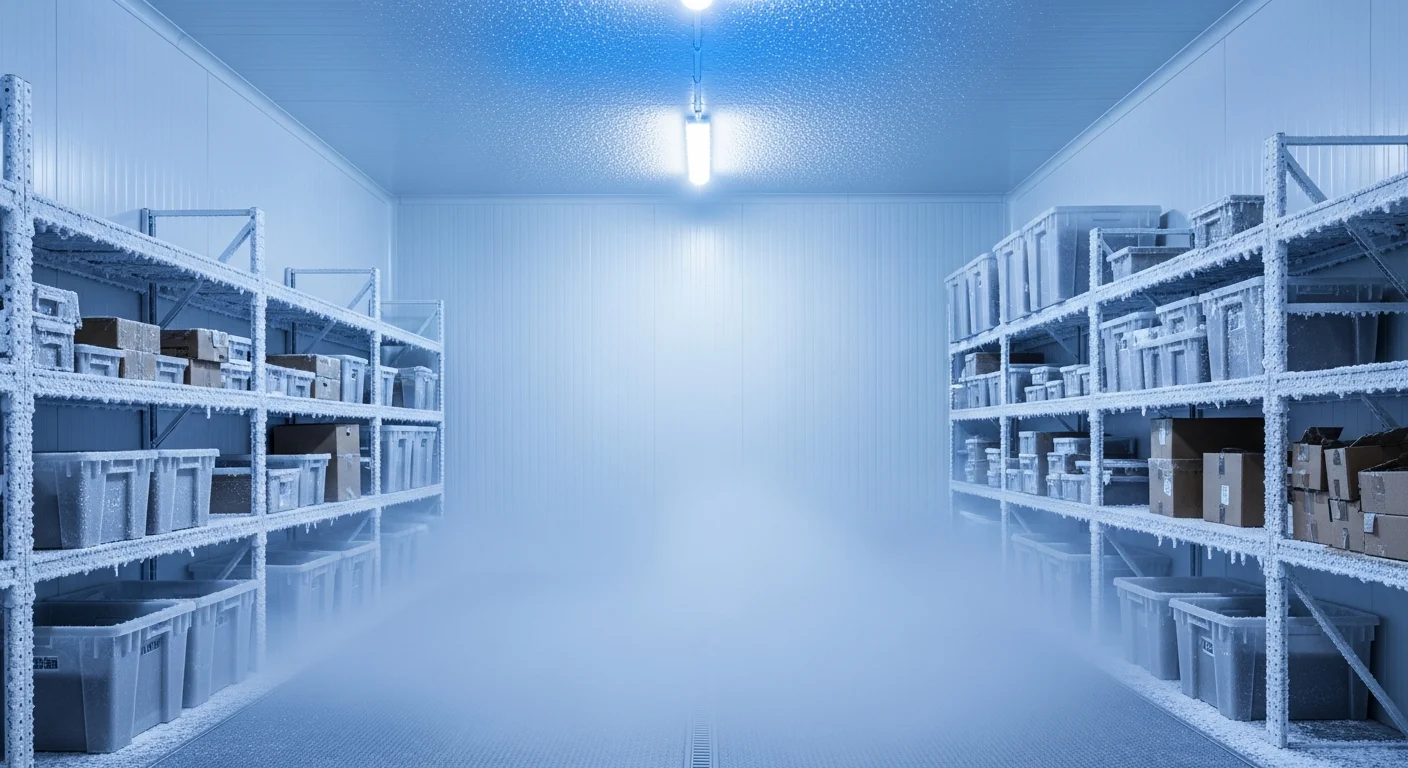
If you’re building a freezer room, the panel core matters more than anywhere else on the job. A freezer has to hold a big temperature gap, 24 hours a day, often through an Australian summer — and the insulation is what makes that affordable to run. That’s why a PIR freezer cool room kit is the right call: PIR gives the most insulation per millimetre of any common core — so a 100 mm PIR wall does the job that would take a much thicker EPS panel.
A “kit” just means the panels and parts that make up the room — walls, ceiling, floor, a freezer-rated door and the trims that seal it all together. Get the core right and the room holds temperature, passes inspection and keeps your power bill down for years. Here’s why PIR is the core to choose for a freezer.
A freezer is the toughest test for a panel
A chiller sits around +2 to +8 °C. A freezer runs at −18 to −25 °C. In an Australian summer that’s a 50-60 degree gap between the inside of the room and the air outside it — and heat pushes across that gap every second of every day. The refrigeration never really stops. The only thing standing between that heat and your compressor is the insulation in the panel, which is why a freezer is exactly where a better core pays off.
PIR gives the most R-value per millimetre
Insulation is measured by R-value — higher is better — and it comes from the core’s thermal conductivity (lambda, or λ) and its thickness. PIR has the lowest λ of the common cores (≈ 0.022 W/m·K), so it delivers the highest R-value for a given thickness. For a freezer, where you need a lot of insulation, that’s the whole game.
| Core | λ (W/m·K) | R-value at 150 mm |
|---|---|---|
| PIR | ~0.022 | ~R6.8 |
| EPS | ~0.037 | ~R4.1 |
| Rockwool | ~0.040 | ~R3.75 |
Same wall thickness, and PIR carries noticeably more insulation than EPS or Rockwool. For a freezer that difference is the gap between a room that holds −20 °C comfortably and one that fights to get there. In practice, 100 mm PIR (about R4.5) is the efficient sweet spot for most freezer rooms — roughly the insulation you’d need about 165 mm of EPS to match, so you get freezer-grade performance without a thicker, heavier wall.
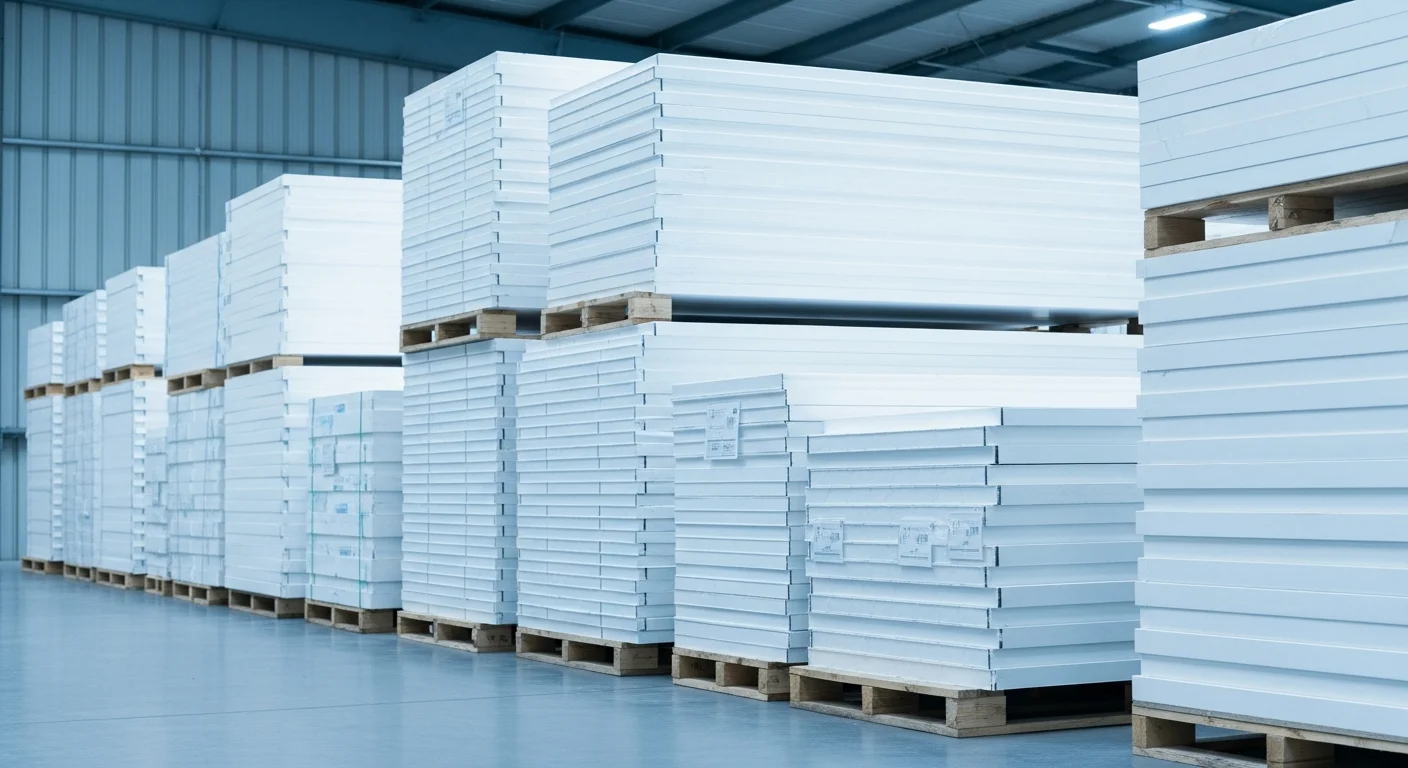
What’s in a PIR freezer cool room kit
A freezer kit is more than four walls. A properly specified PIR freezer cool room kit includes:
- PIR wall & ceiling panels — sized to your temperature, typically 100 mm PIR for a freezer — it insulates like a much thicker EPS wall.
- Insulated floor panels — a freezer runs below 0 °C, so the floor needs insulating too, not just the walls.
- A freezer-rated door — with a heated frame or seal to stop it icing up and jamming shut.
- Cam-lock joins — panels pull tight together for a sealed, thermal-bridge-free seam.
- Flashings, trims and seals — the parts that finish corners and keep the cold in.
Miss one of these — an uninsulated floor, a non-freezer door — and the room will ice up, leak cold and cost a fortune to run. The kit is designed to work as one system.
Better insulation, lower running cost
On a freezer, insulation isn’t just comfort — it’s the power bill. The more heat leaks in, the longer the compressor runs to pump it back out, every single day. Because PIR leaks the least heat for a given wall thickness, it directly cuts that run-time.
→ higher R (PIR) = less heat in = less compressor run-time = lower kWh
The temperature gap on a freezer is roughly twice that of a chiller, so the insulation does twice the work — and PIR’s edge compounds. Over the life of the room, the better core usually pays back its higher price and then keeps saving. (More on what drives the bill in our guide to cool room running costs.)
PIR vs EPS vs Rockwool for a freezer
All three cores build good cool rooms — but for a freezer the answer is usually clear:
PIR
Most R per mm · the freezer default · this guide
EPS
Great value for chillers & cool rooms, not freezers
Rockwool
Choose when a non-combustible fire rating is required
PIR is the default for freezers. Pick Rockwool only if a fire rating is mandated for your building; pick EPS for chillers and standard cool rooms where the temperature gap is smaller. See the full EPS vs PIR vs Rockwool comparison, or the dedicated PIR panels page.
Thinner walls, more usable space
Because PIR carries more insulation per millimetre, you can hit a freezer’s insulation target with a thinner wall than EPS would need. On a tight site or inside an existing building, that thinner build-up gives you more usable internal volume for the same footprint — a real bonus when floor space is at a premium.
Planning a freezer room?
Size your room, get panel counts for a PIR freezer kit, then send the spec straight to supply.
Frequently asked questions
What thickness of PIR do I need for a freezer room?
100 mm PIR is the efficient standard for most freezer rooms. Because PIR has the lowest thermal conductivity of the common cores, 100 mm (about R4.5) insulates like roughly 165 mm of EPS – so you get freezer-grade performance without a thicker wall. Only unusually cold set-points or very hot surroundings call for stepping up. A −18 to −25 °C freezer in an Australian summer is a big temperature gap to hold, so the extra insulation is worth it. Size your room in the calculator to get panel counts for your thickness.
Is a PIR freezer kit better than EPS?
For a freezer, yes. PIR has the lowest thermal conductivity of the common cores (λ ≈ 0.022 vs about 0.037 for EPS), so it delivers more R-value per millimetre. That means a PIR freezer holds temperature with thinner walls and less compressor run-time. EPS is a great value core for chillers and standard cool rooms, but a freezer is where PIR earns its price.
Does a freezer cool room need an insulated floor?
Usually yes. Unlike many chillers, a freezer runs below 0 °C, so an uninsulated slab leaks cold and can lead to condensation or ground freezing over time. A proper PIR freezer kit includes insulated floor panels matched to the walls and ceiling.
Is PIR fire safe?
PIR performs better than standard EPS – it is fire-retardant and chars rather than melting, which slows flame spread. It is not an A1 non-combustible core, however; where that is specifically required, Rockwool is the correct choice. Always match the panel’s fire performance to the NCC requirements for your building.
Can you supply a PIR freezer cool room kit Australia-wide?
Yes – PIR panels, freezer-rated doors and accessories are supplied Australia-wide through Cool Room Master. Size your room first, then request a delivered quote for your kit.