
EPS Panels.
The most economical and lightest insulated panel core — the practical default for cool rooms, food storage, sheds and modular builds across Australia.
R-value climbs with thickness
EPS insulates at roughly λ ≈ 0.037 W/m·K. Thicker core = higher R-value. Indicative figures — always confirm against the manufacturer datasheet for your panel.
Where EPS is the smart choice
Cool rooms
Chiller and produce rooms where standard insulation is ample and budget matters.
Food storage
Hygienic wipe-clean steel facings suit food-grade and back-of-house spaces.
Sheds & partitions
Lightweight panels speed up install for sheds, dividing walls and modular rooms.
Modular / relocatable
Low weight makes EPS easy to transport, crane and re-configure on site.
Ceilings
Long spans with low dead-load — a common pick for insulated ceiling panels.
Cladding
Clean architectural facings for external walls where fire rating allows.
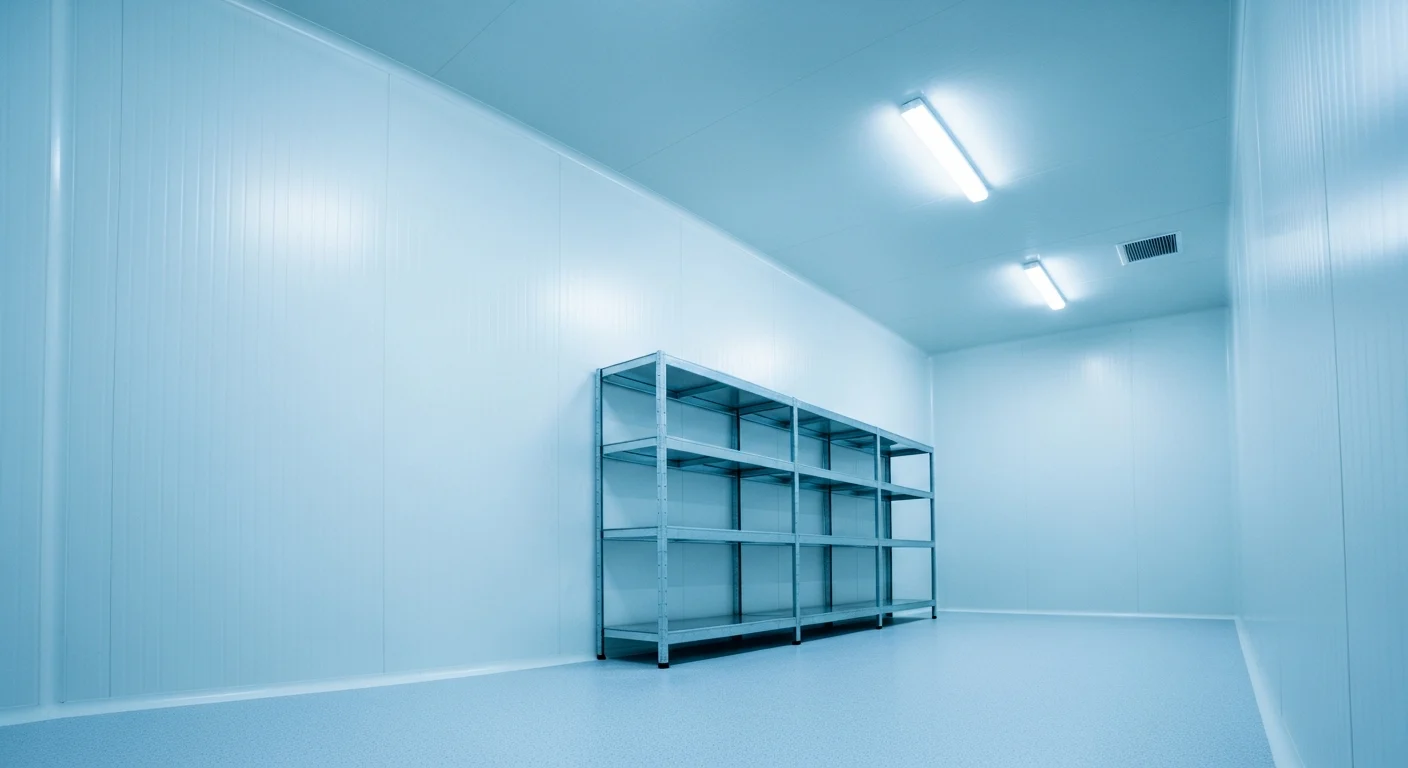
EPS vs PIR vs Rockwool
EPS trades a little thermal performance for the lowest cost and weight. Need more R per millimetre, or a non-combustible core? See the full comparison.
EPS
Lowest cost · lightest · this page
Rockwool
Non-combustible (A1) · best fire
PIR
Best insulation per mm · priciest
EPS panel questions
Are EPS panels suitable for cool rooms?
Yes — EPS is the most common core for chillers and general cool rooms. For freezers or where maximum R-value in minimal thickness is needed, PIR is often chosen; where a non-combustible core is mandated, Rockwool.
What thickness should I choose?
50–75 mm suits ambient partitions and sheds; 100 mm is a common cool-room wall; 150–200 mm is used for colder set-points and freezers. Use the calculator to size panel counts for your room.
Is EPS fire-safe?
Standard EPS is combustible; fire-retardant (FR) grades are available and widely used. Always match the panel’s fire performance to the NCC requirements for your building class.
Can panels be delivered Australia-wide?
Yes — panels and accessories ship Australia-wide through Cool Room Master. Size your job first, then request a quote.
Size your EPS panels in the browser
Enter your room, get panel counts and accessory metres, then send it straight to supply.