
Cool Room Panels.
Insulated sandwich panels are the walls, ceiling and door of every cool room and freezer. Pick the core and thickness for your temperature, and it clicks together on site.
Cool, cold or frozen?
Your set-point drives panel thickness and core. Colder rooms need more insulation — thicker panels, and often a PIR core for freezers.
Indicative guidance — final thickness depends on ambient conditions, floor, door usage and your refrigeration design. Run the calculator →
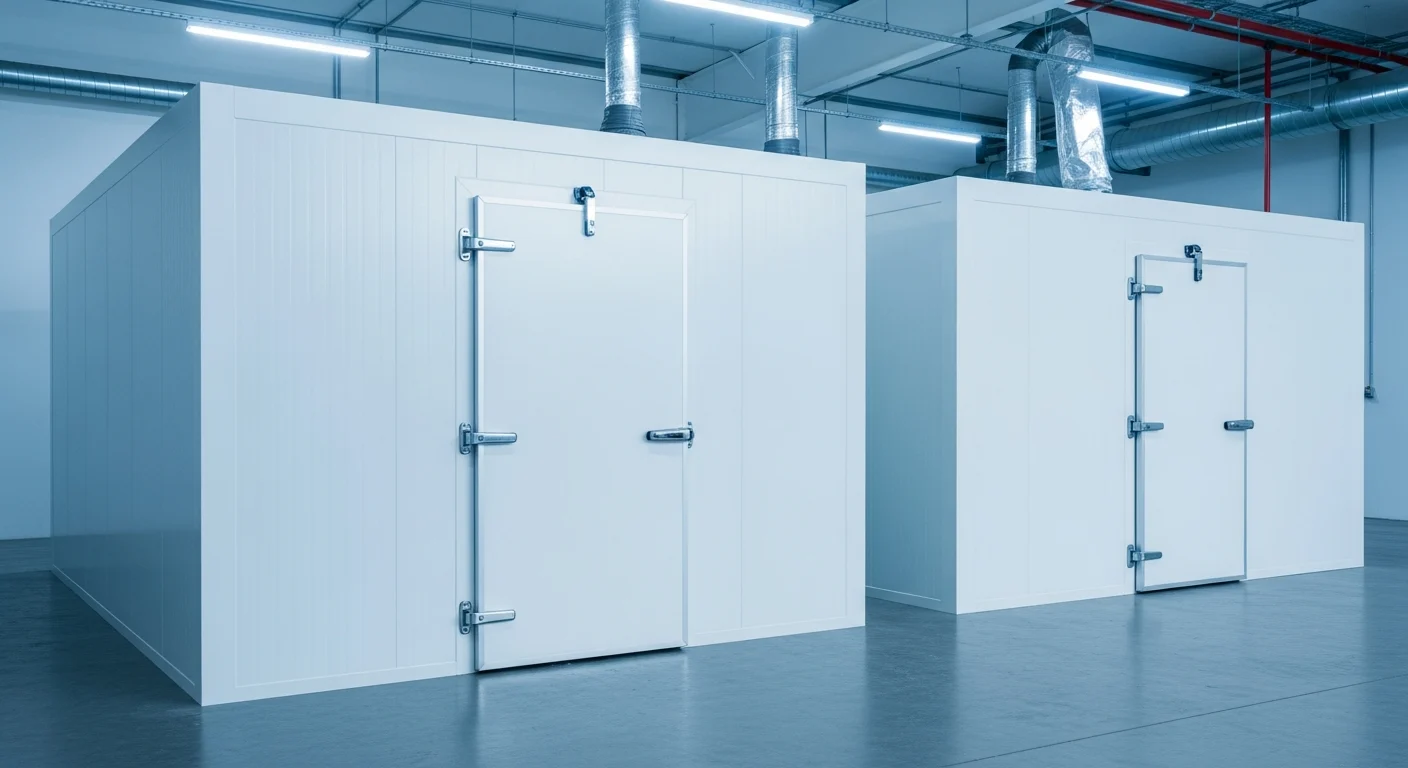
The build, panel by panel
Wall panels
Cam-locked sandwich panels form airtight, insulated walls.
Ceiling panels
Span the roof; suspended or self-supporting for larger rooms.
Floor panels
Optional insulated floor for freezers and off-slab installs.
Cam-lock joins
Hidden hook locks pull panels tight for a sealed, flush finish.
Coving & trims
Hygienic curved coving and capping for food-grade corners.
Doors
Hinged or sliding insulated doors matched to the panel thickness.
Rough thickness by use
Indicative only — confirm against your refrigeration design and manufacturer datasheet.
Cool room panel questions
What thickness of panel do I need for a freezer?
Freezers typically use 150–200 mm panels, usually with a PIR core for higher R-value in less thickness. Chillers and cool rooms commonly run 75–100 mm EPS.
Can I build a cool room myself with these panels?
Cam-lock panels are designed for straightforward assembly, but refrigeration, floor and compliance details matter. Size the panels here, then talk to Cool Room Master about the full kit.
Do I need an insulated floor?
Chillers on an existing slab often skip it; freezers and off-slab rooms usually need insulated floor panels to stop cold-bridging and frost heave.
Size your cool room in 3D
Enter dimensions and temperature, get panel counts and accessory metres, then send it to supply.